Having several debts at once can make your finances feel harder to manage than they really are. You may have a credit card balance, a personal loan, a car loan, and a few smaller bills—all demanding attention at the same time.
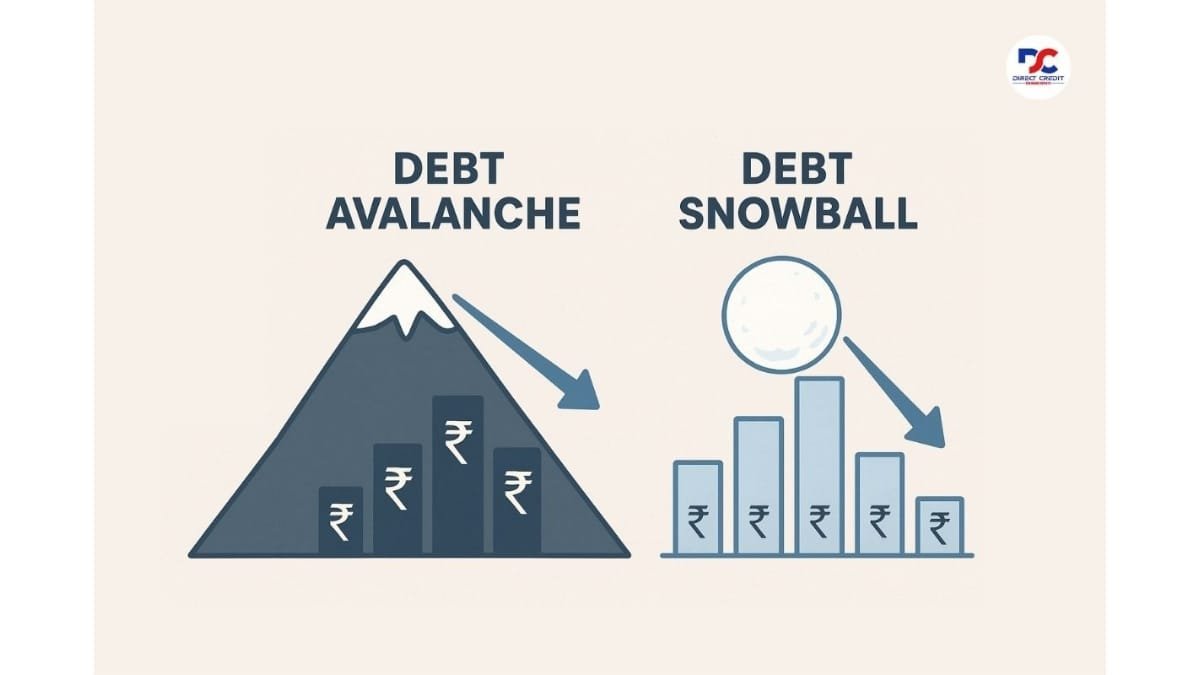
That is where a clear debt repayment strategy can help. Two of the most popular debt payoff methods are the debt snowball method and the debt avalanche method. Both can help you become debt-free, but they prioritize your debts differently.
The key difference is simple: snowball focuses on the smallest balance first, while avalanche focuses on the highest interest rate first. Understanding that difference can help you choose a debt payoff plan you can actually stick with.
What Is the Debt Snowball Method?
The debt snowball method means paying off your debts from the smallest balance to the largest, regardless of the interest rate.
Here is how it works:
- List all your debts from the smallest balance to the largest.
- Make the minimum payment on every debt.
- Put any extra money toward the smallest debt.
- Once that debt is gone, take the payment you were making and add it to the next-smallest debt.
- Continue until every debt is paid off.
The idea is to create quick wins. Seeing one account reach a $0 balance can provide a psychological boost and make the larger goal feel more achievable. The Consumer Financial Protection Bureau (CFPB) describes the snowball approach as a strategy that can help people see progress quickly, although it may result in more interest paid over time.
Example: Suppose you have:
- Credit card: $600
- Personal loan: $2,500
- Car loan: $9,000
With the snowball method, you would continue making minimum payments on all three while putting your extra money toward the $600 credit card. Once it is gone, you redirect that payment toward the $2,500 loan.
The balance disappears one debt at a time, creating momentum.
What Is the Debt Avalanche Method?
The debt avalanche method takes a mathematical approach. Instead of looking at the balance, you rank your debts by interest rate, from highest to lowest.
The process looks like this:
- List your debts from the highest interest rate to the lowest.
- Make the minimum payment on every debt.
- Put extra money toward the debt with the highest interest rate.
- After that debt is paid off, move the extra payment to the next-highest rate.
- Repeat until all debts are gone.
The goal is to attack the debt that is costing you the most in interest. CFPB guidance refers to this as the highest-interest-rate method and notes that eliminating the most expensive debt first can save money over the long run.
Example: Imagine you have:
- Credit card: $4,000 at 24% APR
- Personal loan: $2,500 at 12% APR
- Car loan: $9,000 at 7% APR
Even though the personal loan has a smaller balance than the credit card, the avalanche method would target the 24% credit card first because its interest rate is much higher.
Debt Snowball vs Debt Avalanche: Key Differences
The difference between snowball vs avalanche comes down to what you prioritize: motivation or interest savings.
| Feature | Debt Snowball | Debt Avalanche |
| First debt targeted | Smallest balance | Highest interest rate |
| Main advantage | Quick psychological wins | Potentially less interest |
| Main focus | Motivation | Mathematical efficiency |
| Best for | People who need momentum | People focused on minimizing interest |
| Biggest drawback | May cost more interest | Progress may feel slower |
Neither method requires you to ignore your other debts. You generally continue making at least the required minimum payments while directing extra money toward your target debt.
Which Debt Payoff Method Saves More Money?
If you have the same debts and put the same amount of extra money toward repayment, the debt avalanche method will generally save more interest when the debts have different interest rates.
Why? Your extra payment is attacking the debt charging the highest rate first. Once that balance disappears, you move to the next-highest rate.
The tradeoff is that the first debt may have a large balance. You could make payments for months without completely eliminating an account, which can make the process feel slower.
The snowball method takes the opposite approach. You might pay a little more interest overall, but eliminating smaller balances can give you visible progress sooner. CFPB guidance specifically recognizes this tradeoff between the two strategies.
So, the avalanche method is usually stronger mathematically, while the snowball method can be stronger psychologically.
Which Method Is Better for You?
There is no single debt payoff method that works perfectly for everyone.
Choose the debt snowball if:
- You need quick wins to stay motivated.
- You have several small debts.
- Seeing accounts disappear helps you stay committed.
- You have struggled to stick with previous repayment plans.
Choose the debt avalanche if:
- Your main goal is reducing interest costs.
- You are comfortable waiting longer for your first account to disappear.
- You have high-interest credit card debt.
- You prefer making decisions based on the numbers.
Consistency matters more than choosing the theoretically perfect method. A strategy that saves interest but gets abandoned after two months is not much help. Likewise, a snowball plan that keeps you motivated and moving forward can be valuable even if it costs somewhat more in interest.
The best debt payoff plan is one you can maintain month after month.
Example: Snowball vs Avalanche
Consider this fictional three-debt situation:
| Debt | Balance | Interest Rate |
| Credit Card A | $900 | 22% |
| Credit Card B | $2,000 | 18% |
| Personal Loan | $5,000 | 9% |
With the snowball method, the order would be:
1. $900 Credit Card A → 2. $2,000 Credit Card B → 3. $5,000 Personal Loan
With the avalanche method, the order would be:
1. 22% Credit Card A → 2. 18% Credit Card B → 3. 9% Personal Loan
In this example, both strategies happen to start with the same debt. But that is not always the case.
Imagine the $900 credit card had a 10% rate while the $2,000 credit card had a 25% rate. Snowball would still target the $900 balance first, while avalanche would attack the $2,000 balance because of its higher interest rate.
That is the core difference: snowball asks “Which balance can I eliminate first?” Avalanche asks “Which debt is costing me the most?”

Frequently Asked Questions
Is the debt snowball or avalanche method better?
The avalanche method is generally better for minimizing interest, while the snowball method may be better for motivation. The right choice depends on which approach you can consistently follow.
Does the debt avalanche method really save money?
It can. By directing extra payments toward the highest-interest debt first, you reduce the balance that is generating the most interest before moving to lower-rate debts.
Can I use the snowball method if I have high-interest credit card debt?
Yes. You can use the snowball method with credit card debt, but remember that a high-interest balance can continue accumulating significant interest while you focus on smaller debts. Credit card balances can become more expensive when you carry them from month to month.
Should I pay off my smallest debt first?
If you are using the snowball method, yes. You continue making minimum payments on your other debts and direct extra money toward the smallest balance.
What is the fastest way to become debt-free?
There is no universal fastest method because the answer depends on your balances, interest rates, minimum payments, and how much extra money you can put toward debt. In general, making larger extra payments and avoiding new debt can accelerate your payoff.
Final Verdict
When comparing debt snowball vs debt avalanche, the biggest difference is what you attack first.
The snowball method targets the smallest balance and can give you quick psychological wins. The avalanche method targets the highest interest rate and will generally reduce total interest when all other factors are equal.
If saving the most money is your top priority, avalanche is usually the logical choice. If staying motivated has been your biggest challenge, snowball may be the better fit.
Start by listing every debt, its balance, interest rate, and minimum payment. Then choose the strategy that matches how you actually manage money—not just the one that looks best on paper. A simple plan followed consistently is far more useful than a perfect plan you abandon.