

Saving money sounds simple, but staying motivated to save month after month can be difficult. Unexpected expenses, impulse purchases, rising living costs, and small financial setbacks can quickly make saving feel frustrating.
The good news is that saving does not have to depend on constant willpower. With clear goals, realistic targets, and simple habits, you can make saving a regular part of your financial life.In this guide, you’ll learn practical ways to build saving motivation, stay consistent, and turn small savings into meaningful financial progress.
What Is Saving Motivation?
Saving motivation is the reason or mindset that encourages you to set money aside instead of spending it immediately.
Your motivation could come from a specific financial goal, such as:
- Building an emergency fund
- Saving for a home
- Paying off debt
- Preparing for retirement
- Planning a vacation
- Buying a car
- Creating financial security
The stronger and more personal the goal, the easier it can be to stay committed to saving.
Why Is It So Hard to Stay Motivated to Save?
Saving can feel difficult because the reward is usually in the future, while spending provides immediate satisfaction.
For example, spending $100 on a purchase gives you something you can enjoy today. Saving that same $100 may not feel exciting because the benefit comes later.
Other factors can also make saving difficult:
- Your savings goal may feel too far away.
- You may set unrealistic monthly targets.
- Unexpected expenses can interrupt your progress.
- You may not track your progress.
- Frequent small purchases can reduce the money available for saving.
- You may focus more on what you’re giving up than what you’re building.
Understanding these challenges is important because losing motivation does not necessarily mean you are bad at managing money. It may simply mean your saving system needs to be easier to maintain.
1. Give Your Savings a Specific Purpose
One of the easiest ways to improve saving motivation is to stop thinking about savings as simply “money in the bank.”
Give the money a purpose.
Instead of saying:
“I need to save more money.”
Set a specific goal:
“I want to build a $3,000 emergency fund.”
A specific target gives you something measurable to work toward.
You can divide a large goal into smaller milestones:
- First $500
- First $1,000
- $1,500
- $2,000
- $3,000
Reaching smaller milestones can make a large financial goal feel much more achievable.
2. Start With a Realistic Savings Target
One of the biggest mistakes people make is setting a savings target that is too aggressive.If your income allows you to comfortably save $200 per month, setting a target of $800 may create unnecessary pressure.A smaller target that you can maintain is often better than an ambitious target that you abandon after a few months.
For example, saving $150 every month would result in:
$1,800 after one year
And that is before considering any interest or investment growth.
The goal is to create consistency first. You can increase the amount as your income or financial situation improves.
3. Automate Your Savings
Motivation can change from one week to another. Automation removes some of the decision-making from the process.
You can arrange for a fixed amount to move from your checking account to a savings account shortly after receiving your income.
For example:
Monthly income → Automatic savings → Remaining money for expenses
This approach helps make saving a habit rather than something you have to remember to do.
Even a small automatic transfer can help establish consistency.
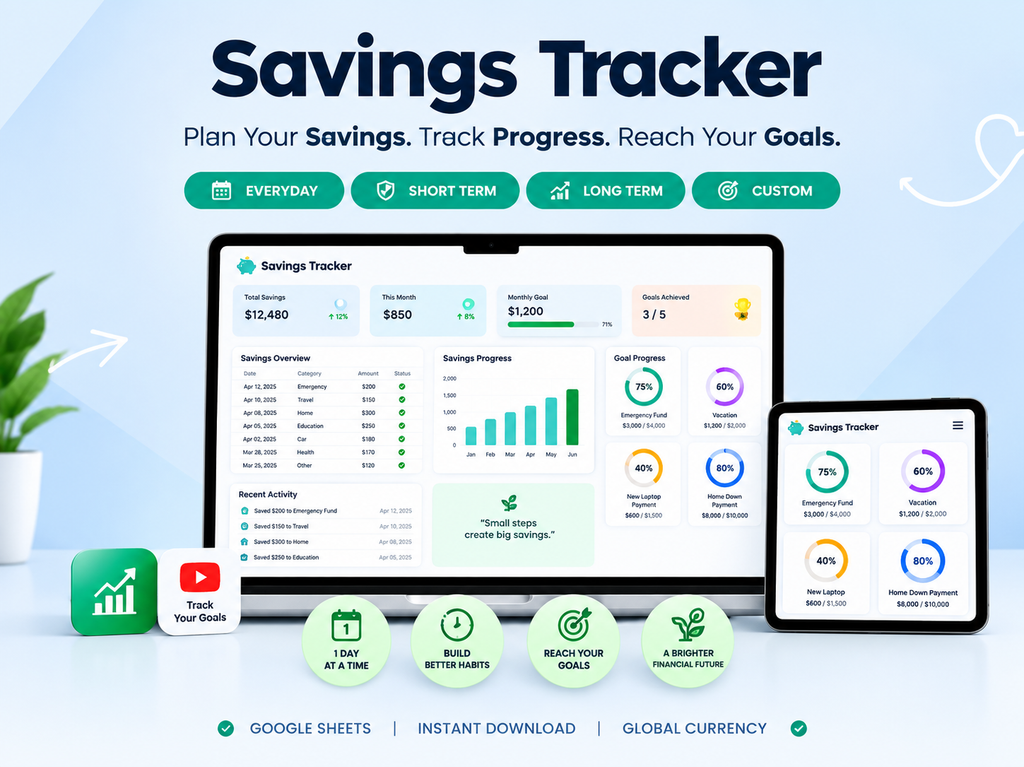
4. Track Your Savings Progress
Watching your savings balance grow can provide a powerful psychological boost.
Create a simple progress tracker showing:
Goal: $5,000
Current savings: $2,750
Remaining: $2,250
Progress: 55%
You can update it every month.
Seeing measurable progress can make saving feel more rewarding and remind you that your efforts are producing results.
5. Use Small Savings Challenges
Saving challenges can make the process more engaging.
For example, you could create a monthly challenge where you:
- Save a fixed amount every week
- Reduce one unnecessary expense
- Have several no-spend days
- Transfer leftover money into savings
- Increase your monthly savings by a small amount
The purpose isn’t to make saving difficult. It is to make the habit more interesting and give yourself short-term wins.
6. Reduce Spending Without Eliminating Everything You Enjoy
Saving does not mean removing every enjoyable expense from your life.
An overly restrictive budget can eventually become difficult to maintain.
Instead, identify expenses that provide little value to you.
For example, you might discover that you are spending money on:
- Unused subscriptions
- Frequent food delivery
- Impulse purchases
- Unplanned online shopping
- Convenience fees
Cutting a few low-value expenses may free up money for savings without making your lifestyle feel unnecessarily restrictive.
7. Create a Separate Savings Account
Keeping your savings separate from your everyday spending money can make it easier to avoid accidentally spending it.
You could have different accounts or savings categories for goals such as:
Emergency Fund
Vacation Fund
Home Fund
Car Fund
Long-Term Savings
Separating your goals can also make your progress easier to understand.
8. Reward Progress Without Destroying Your Budget
Saving should feel rewarding.
When you reach an important milestone, give yourself a small, affordable reward.
For example, after reaching a savings milestone, you might enjoy a low-cost activity you’ve been looking forward to.
The reward should fit within your budget rather than undoing your savings progress.
The idea is to connect saving with positive experiences instead of seeing it only as a sacrifice.

9. Remember What Your Savings Protects You From
Savings are not only about buying something in the future.
They can also protect you from financial stress.
An emergency fund, for example, can help cover unexpected expenses such as:
- Car repairs
- Home repairs
- Emergency travel
- Unexpected bills
- Temporary income disruption
Without savings, an unexpected expense may force you to rely on credit cards or loans.
This is why building savings can be about creating financial security, not simply accumulating money.
10. Don’t Let One Bad Month Stop Your Progress
Almost everyone experiences months when saving becomes difficult.
Maybe an unexpected bill appears, your expenses increase, or your income changes.
That does not mean your entire savings plan has failed.
Instead of thinking:
“I failed at saving.”
Think:
“This month was difficult. I can restart next month.”
Consistency over a long period matters more than having a perfect savings record.
A Simple Saving Motivation Plan
If you want a straightforward system, try this five-step approach:
Step 1: Choose One Main Goal
Pick one financial goal that matters most to you right now.
Step 2: Set a Dollar Amount
Decide exactly how much you want to save.
Step 3: Choose a Deadline
Give yourself a realistic timeframe.
Step 4: Break It Into Monthly Targets
Divide the remaining amount by the number of months available.
Step 5: Track Your Progress
Review your savings once a month and adjust your target when necessary.
For example:
Goal: $2,400
Timeframe: 12 months
Monthly target: $200
This turns a large goal into a manageable monthly action.
What If You Can’t Save Much Money?
You do not need a large income to begin developing a saving habit.
If you can only save a small amount, start there.
Saving $25 per month may seem insignificant, but the more important first step can be building the habit of regularly setting money aside.
As your financial situation improves, you can gradually increase your contribution.
The key question is not:
“How much can I save compared with someone else?”
It is:
“What amount can I consistently save without damaging my essential finances?”
Saving Motivation vs. Willpower
It is tempting to think successful savers simply have more discipline.
In reality, your financial system can matter just as much as your motivation.
If you rely entirely on willpower, you must make the decision to save every time you receive money.
If you automate your savings, create clear goals, and separate savings from spending money, the system does more of the work for you.
Good financial habits reduce the amount of motivation you need.
Final Thoughts
Saving motivation can come and go, but a strong financial system can help you continue making progress even when motivation is low.
Start with a specific goal, choose a realistic savings amount, automate your contributions, track your progress, and give yourself room for occasional setbacks.
You do not need to transform your finances overnight. Small, consistent savings decisions can build financial security over time.
The most important step is simply to start and keep moving forward.
2 thoughts on “Saving Motivation: How to Stay Motivated and Build Better Saving Habits”