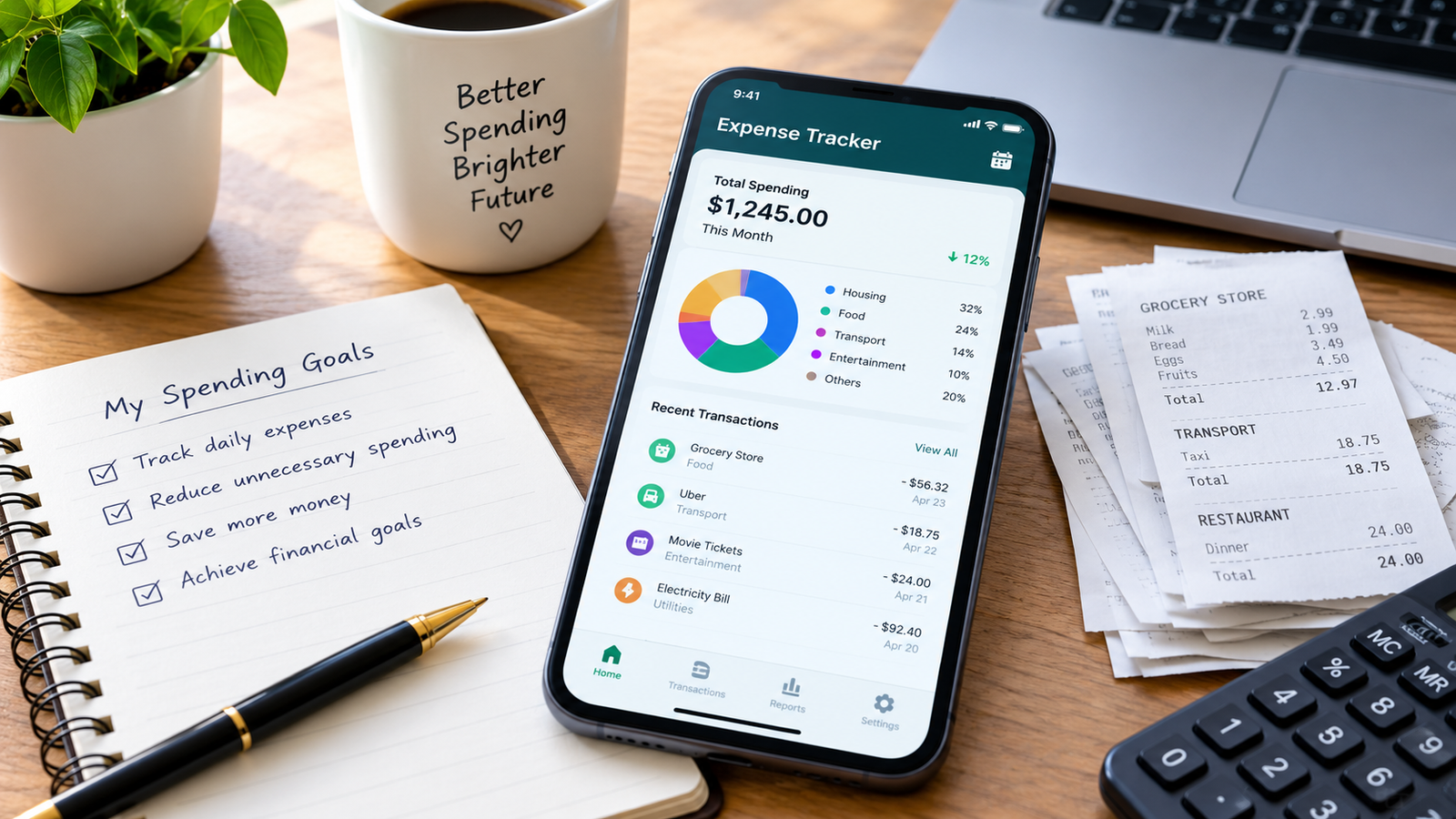
Knowing where your money goes is one of the most important parts of managing your finances. You may have a steady income and still struggle to save if small purchases, recurring bills, and unnecessary expenses are not being tracked.
A personal expense tracker can help you see your spending clearly. By recording what you spend, organizing expenses into categories, and reviewing your habits regularly, you can make better decisions about your money.
You do not need an expensive app or complicated spreadsheet. A simple tracking system can be enough to understand your spending and improve your financial habits.
What Is a Personal Expense Tracker?
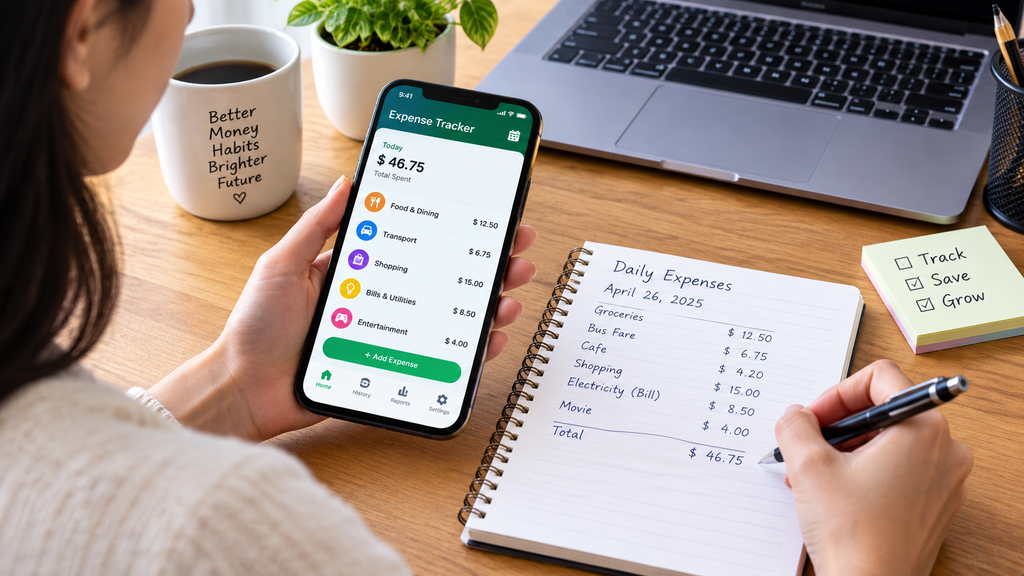
A personal expense tracker is a tool or system used to record and monitor your spending.
You can track expenses using:
- A spreadsheet
- A mobile budgeting app
- A notebook
- A computer document
- A banking or financial-management tool
A basic expense tracker records information such as:
| Date | Expense | Category | Amount |
| Sept. 2 | Groceries | Food | $85 |
| Sept. 4 | Gas | Transportation | $50 |
| Sept. 6 | Streaming | Entertainment | $15 |
| Sept. 8 | Electricity | Utilities | $120 |
The purpose is not simply to create a list of purchases. The real value comes from reviewing that information and understanding your spending patterns.
Why Should You Track Personal Expenses?
Many people underestimate how much they spend on small purchases.
A $5 purchase may not seem significant. But spending $5 several times a week can add up to hundreds of dollars over a year.
Tracking your expenses can help you:
- Understand where your money goes
- Identify unnecessary spending
- Stay within your budget
- Find opportunities to save
- Prepare for upcoming bills
- Monitor financial goals
- Make more informed spending decisions
When you have accurate information, budgeting becomes easier.
How to Create a Personal Expense Tracker
Creating an expense tracker can be simple.
1. Choose Your Tracking Method
Start with the method you are most likely to use consistently.
You could use:
- A spreadsheet for detailed tracking
- A budgeting app for convenience
- A notebook for a simple approach
- Your bank’s transaction history for reviewing spending
The best method is the one you will actually maintain.
2. Record Every Expense
Try to record purchases as consistently as possible.
Include both large and small expenses.
For example:
- Rent
- Groceries
- Coffee
- Transportation
- Online purchases
- Insurance
- Entertainment
- Subscriptions
Small expenses are especially important because they are easy to overlook.
3. Organize Spending Into Categories
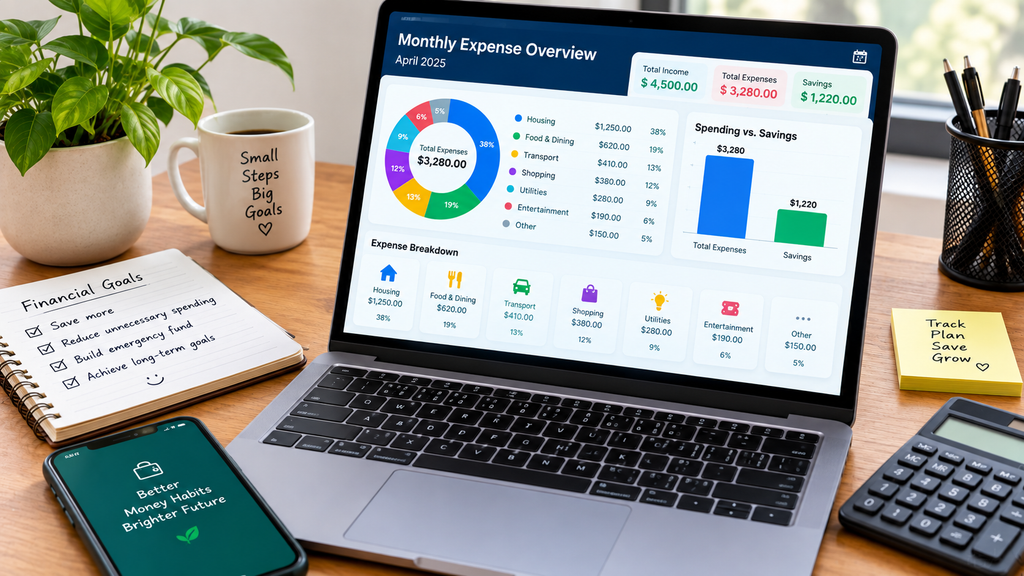
Categorizing expenses makes your tracker much more useful.
Common categories include:
Housing
Rent, mortgage, property-related expenses
Food
Groceries, restaurants, delivery
Transportation
Fuel, public transportation, parking, maintenance
Utilities
Electricity, water, internet, phone
Debt
Credit card and loan payments
Entertainment
Streaming, hobbies, events
Savings
Emergency fund and other savings goals
Personal
Clothing, personal care, and miscellaneous purchases
You can create categories that match your own lifestyle.
Fixed vs. Variable Expenses
One useful way to analyze spending is to separate expenses into fixed and variable costs.
Fixed Expenses
These are expenses that tend to remain relatively stable.
Examples include:
- Rent
- Mortgage payments
- Insurance premiums
- Loan payments
- Some subscription services
Variable Expenses
These can change from month to month.
Examples include:
- Groceries
- Dining out
- Gas
- Entertainment
- Shopping
Understanding this difference can help you identify which expenses are easier to adjust when you need to reduce spending.
Essential vs. Non-Essential Spending
Another useful classification is separating needs from wants.
Essential Expenses
These are expenses necessary for basic living or important financial obligations.
Examples may include:
- Housing
- Food
- Utilities
- Transportation
- Required debt payments
Non-Essential Expenses
These are expenses that may improve your lifestyle but are not necessary for basic needs.
Examples include:
- Entertainment
- Dining out
- Luxury purchases
- Some subscriptions
- Impulse shopping
This does not mean you should eliminate every non-essential expense.
Instead, categorizing them helps you understand where you have flexibility.
Personal Expense Tracker Example
Suppose your monthly spending looks like this:
| Category | Monthly Spending |
| Housing | $1,200 |
| Food | $450 |
| Transportation | $250 |
| Utilities | $180 |
| Debt Payments | $200 |
| Entertainment | $120 |
| Personal | $150 |
| Other | $100 |
| Total | $2,650 |
Once you see the numbers, you may notice that certain categories are consuming more of your income than expected.
That information can help you decide where adjustments are possible.
How to Use an Expense Tracker to Improve Your Budget
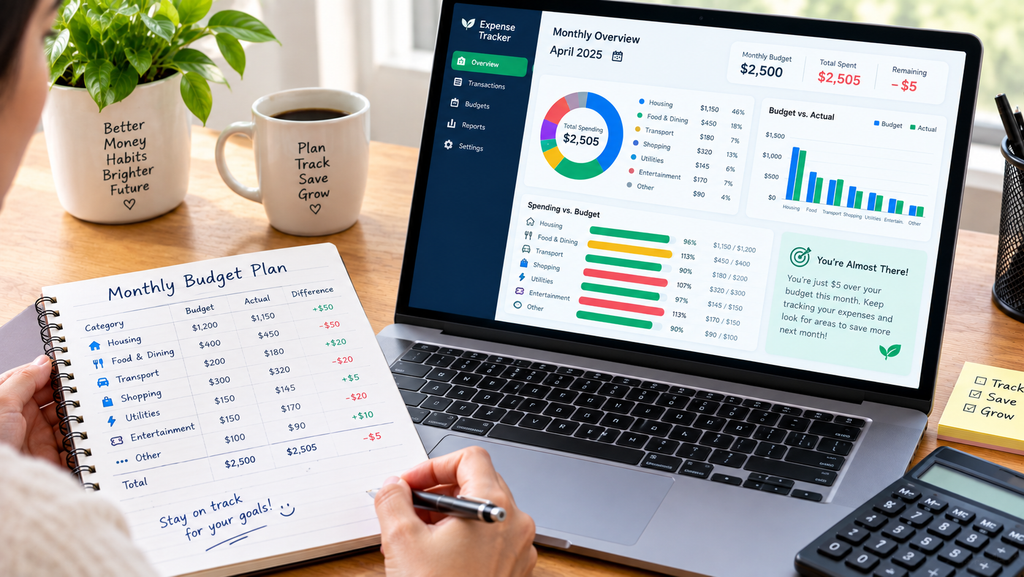
An expense tracker and a budget serve different purposes.
A budget tells your money where you plan to spend it.
An expense tracker tells you where your money actually went.
Using both together can be powerful.
For example:
Budgeted for dining: $150
Actual dining spending: $240
You now know that dining expenses exceeded your plan by $90.
You can then decide whether to reduce future spending or adjust your budget to reflect your actual lifestyle.
Review Your Expenses Weekly
You do not necessarily need to spend hours every day reviewing your finances.
A short weekly review can be enough.
During your review:
- Check recent transactions.
- Record missing expenses.
- Categorize purchases.
- Compare spending with your budget.
- Look for unusual expenses.
- Adjust your plans if necessary.
A weekly review can prevent small problems from becoming major monthly budget issues.
Look for Spending Patterns
The biggest benefit of tracking expenses is discovering patterns.
For example, you may notice that:
- Food delivery increases on weekends.
- Online shopping increases after receiving your paycheck.
- Subscription services are rarely used.
- Transportation costs rise during certain weeks.
- Small purchases are reducing your savings.
Once you identify a pattern, you can decide whether it needs to change.
Use Your Expense Tracker to Find Savings Opportunities
Expense tracking should not be about cutting every expense.
Instead, look for spending that provides little value.
For example, suppose your tracker shows:
Streaming subscriptions: $60/month
Food delivery: $180/month
Unused memberships: $40/month
That is $280 per month.
If you reduce unnecessary spending by even $100 per month, you could potentially redirect that money toward savings or debt repayment.
The goal is to make your money work better for you.
Track Irregular Expenses Too
Some expenses do not occur every month, but they still need to be considered.
Examples include:
- Car repairs
- Annual insurance
- Holiday purchases
- Medical expenses
- Home maintenance
- School-related costs
- Property taxes
If you only track regular monthly bills, your financial picture may be incomplete.
Consider creating a separate category for irregular or annual expenses.
Personal Expense Tracker and Savings
Tracking expenses can make saving easier because it shows where money may be available.
For example, imagine you discover that you spend an average of $250 per month on unnecessary purchases.
You could redirect part of that money toward an emergency fund.
Even $100 per month would become:
$100 × 12 = $1,200 per year
The amount may seem small at first, but consistent savings can add up over time.
Personal Expense Tracker for Debt Management
Expense tracking can also help with debt repayment.
If you know exactly how much you spend each month, you may be able to identify money that can be redirected toward high-interest debt.
For example:
Monthly income: $4,000
Necessary expenses: $2,700
Other spending: $500
Available: $800
Depending on your overall financial situation, some of that available money could potentially be allocated toward debt repayment and savings.
The key is to understand your complete cash flow before making changes.
Common Expense Tracking Mistakes
Tracking Only Large Purchases
Small purchases can add up, so include them too.
Forgetting Cash Spending
Cash transactions can easily disappear from your records.
Record them as soon as possible.
Creating Too Many Categories
An overly complicated tracker can become difficult to maintain.
Start with a manageable number of categories.
Tracking Without Reviewing
Recording expenses is only the first step.
The real benefit comes from analyzing the information and making better decisions.
Giving Up After a Few Days
Your tracker does not need to be perfect.
If you miss a few transactions, simply continue tracking.
Consistency matters more than perfection.
How Often Should You Track Expenses?
There is no single correct schedule.
You could:
- Record expenses daily
- Review transactions every few days
- Perform a weekly review
- Complete a detailed monthly review
For many people, recording purchases regularly and reviewing the full picture once a week can be a practical approach.
The important thing is to choose a system you can maintain.
Personal Expense Tracker vs. Budget
These tools work together but have different purposes.
| Personal Expense Tracker | Budget |
| Records actual spending | Plans future spending |
| Shows where money went | Sets spending limits |
| Helps identify patterns | Helps control spending |
| Based on transactions | Based on financial goals |
| Used for monitoring | Used for planning |
Using both can give you a clearer picture of your finances.
Make Expense Tracking a Habit
The easiest way to make expense tracking successful is to turn it into a routine.
For example:
Daily: Record new purchases.
Weekly: Review categories and spending.
Monthly: Compare actual spending with your budget.
Every few months: Review recurring expenses and financial goals.
Over time, tracking can become a normal part of managing your money rather than a task you avoid.
Final Thoughts
A personal expense tracker is a simple but powerful money-management tool. It can show you where your money goes, reveal spending patterns, and help you make better decisions about saving, budgeting, and debt.
You do not need a complicated system. Start by recording your income and expenses, organize spending into practical categories, and review the information regularly.
The goal is not to stop spending money. It is to understand your spending well enough to make intentional financial choices.
When you know where your money is going, it becomes easier to decide where you want it to go next.