
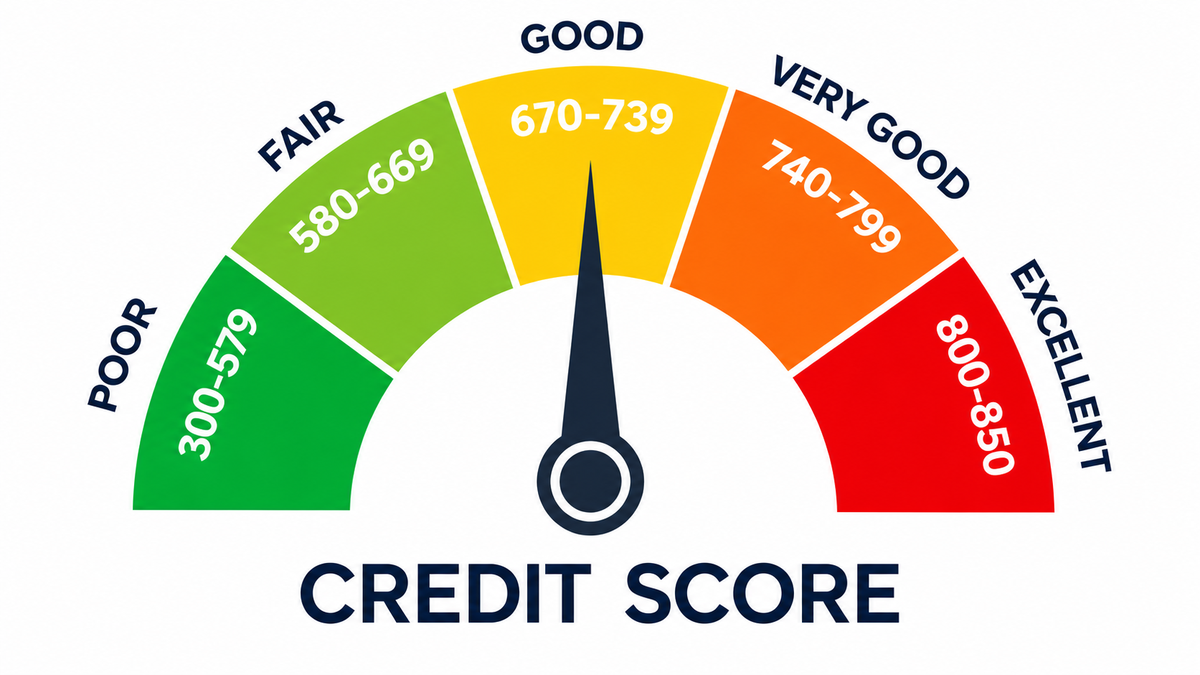
Building credit from scratch can feel confusing when you have no credit history. Without a track record of borrowing and repaying money, lenders may have limited information to evaluate your creditworthiness.
The good news is that building credit with no credit history is possible. The key is to start with manageable forms of credit, make payments on time, keep balances under control, and give your credit profile time to develop.
Whether you are a young adult, a first-time borrower, or someone who has never used credit before, understanding the right steps can help you establish a stronger financial foundation.
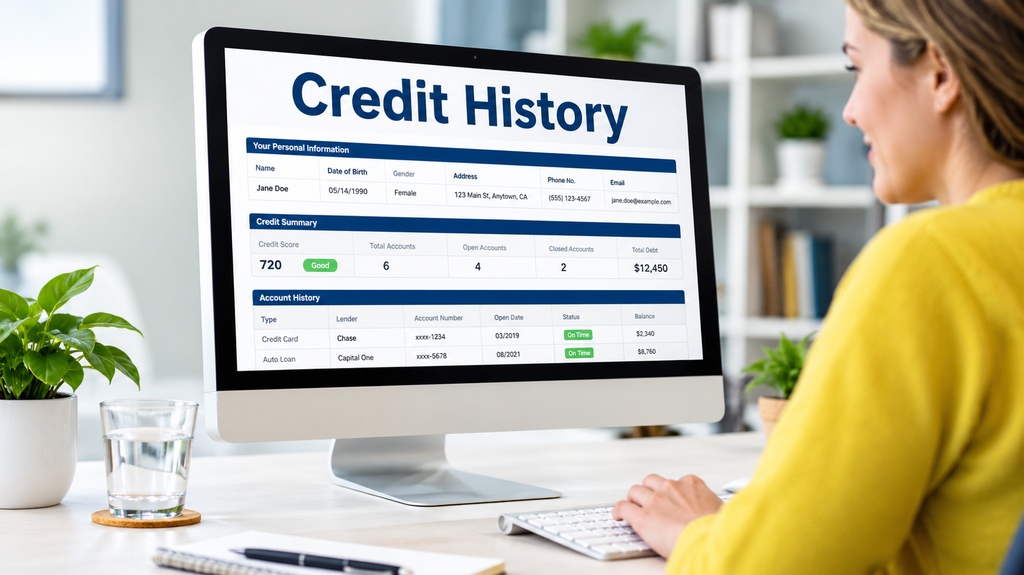
What Does It Mean to Have No Credit History?
Having no credit history generally means there is not enough information in your credit reports to establish a meaningful credit profile.
This is different from having bad credit.
- No credit history: You have little or no recorded borrowing activity.
- Bad credit: You have a history that may include late payments, defaults, high balances, or other negative information.
If you have no credit history, you are starting from the beginning rather than repairing an established history of financial problems.
Why Is Building Credit Important?
A good credit history can make it easier to qualify for financial products and potentially receive better terms.
Depending on your country and financial system, credit history may be considered when you apply for:
- Credit cards
- Personal loans
- Auto financing
- Mortgages
- Rental housing
- Certain financial services
Credit can also affect the interest rate and terms you are offered. A stronger credit profile may give lenders more confidence that you can manage borrowed money responsibly.
How to Build Credit With No Credit History
1. Start With a Secured Credit Card
A secured credit card can be one option for people who cannot qualify for a traditional credit card.
With a secured card, you typically provide a refundable cash deposit that serves as security for the account. The card may then work similarly to a conventional credit card.
For example, you might provide a $300 deposit and receive a $300 credit limit.
Use the card for a small purchase, then pay the balance on time according to the card’s terms.
Before applying, check whether the issuer reports your payment activity to the major credit bureaus. If it does not, the account may not help build your credit history.
2. Consider Becoming an Authorized User
Another potential way to establish credit history is becoming an authorized user on someone else’s credit card.
A family member or trusted person may add you to an existing account. Depending on the issuer and credit-reporting practices, information about that account may appear on your credit report.
However, this strategy comes with an important consideration: if the primary cardholder regularly misses payments or carries very high balances, their account activity could potentially hurt rather than help your credit profile.
Choose the account and primary cardholder carefully.
3. Look Into Credit-Builder Loans
A credit-builder loan is designed specifically to help people establish or strengthen their credit history.
Unlike a traditional loan where you receive the money upfront, the borrowed amount may be held in a savings account while you make scheduled payments.
Once the loan is paid according to its terms, you receive the funds, subject to the lender’s specific structure.
The most important factor is whether the lender reports your payments to the relevant credit bureaus.
4. Make Every Payment on Time
Payment history is one of the most important parts of many credit-scoring systems.
Once you have a credit account, make your payments by the due date.
A simple system can help:
- Set up automatic payments where appropriate.
- Keep enough money available in your account.
- Turn on payment reminders.
- Check your statements regularly.
- Never ignore a bill you cannot afford.
Even one missed payment can create unnecessary problems, so building a reliable payment routine should be a priority from the beginning.
5. Keep Your Credit Card Balance Low
Getting a credit card does not mean you need to use the entire credit limit.
Suppose your card has a $1,000 limit. Regularly carrying a $900 balance can make your credit utilization appear high.
Instead, use only what you can comfortably afford to repay.
A commonly discussed guideline is keeping credit utilization below 30%, but lower utilization can be preferable in many scoring situations. More importantly, do not spend money simply to improve your credit score.
Your goal should be responsible credit management, not maximizing credit usage.
6. Pay Your Credit Card Balance Responsibly
If possible, paying your credit card balance in full by the due date can help you avoid interest charges on purchases when your card’s terms provide a grace period.
For example, you could use your card for:
- A small grocery purchase
- A streaming subscription
- A recurring bill
- A few everyday expenses
Then pay the statement balance according to the card’s terms.
This allows you to demonstrate responsible credit use without taking on unnecessary debt.
7. Don’t Apply for Too Many Accounts at Once
When you are starting your credit journey, it can be tempting to apply for several credit cards or loans.
That is usually not a good strategy.
Multiple applications within a short period may result in multiple hard inquiries, depending on the type of credit and scoring system. Opening several new accounts can also make your credit profile look less stable.
Instead, start with one manageable account and focus on using it responsibly.
8. Monitor Your Credit Reports
Once you begin establishing credit, regularly checking your credit reports can help you understand what lenders may see.
Look for:
- Incorrect personal information
- Accounts you do not recognize
- Incorrect payment history
- Wrong account balances
- Duplicate accounts
- Other inaccurate information
If you find an error, follow the appropriate dispute process with the credit reporting agency or company involved.
Monitoring your credit also helps you become familiar with how your financial behavior affects your credit profile.
How Long Does It Take to Build Credit From Scratch?
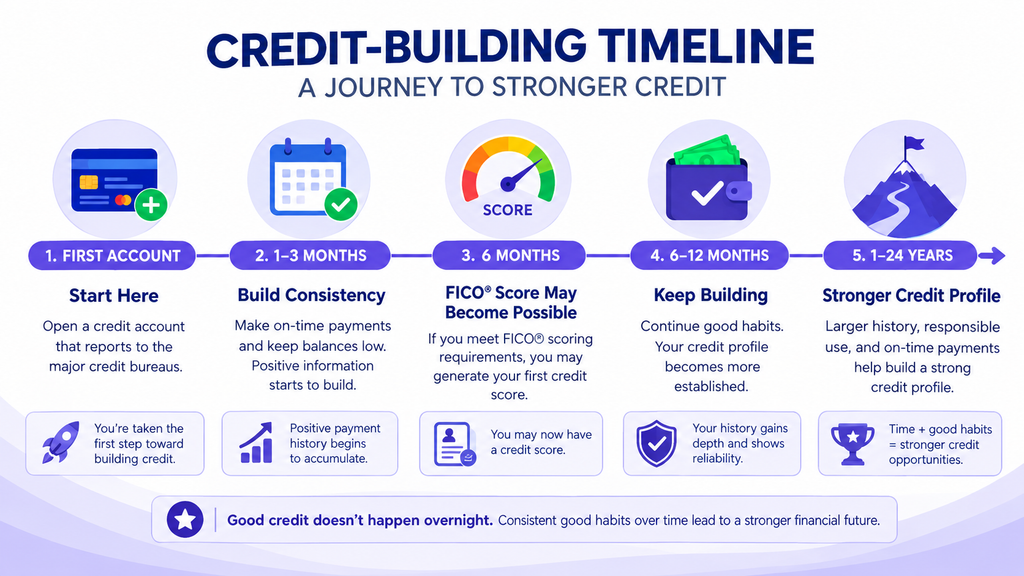
Building credit does not happen overnight.
You generally need accounts reporting information over time before you develop a meaningful credit history. The exact timeline varies depending on the scoring model, lender, account type, reporting practices, and your financial behavior.
The important thing is consistency.
Making one payment on time is good. Making every payment on time for months and years is much more valuable for establishing a reliable credit history.
Example: Building Credit From Zero
Imagine someone has never had a credit card or loan.
They could take a cautious approach:
| Step | Action |
| 1 | Open a credit-building account that reports to the relevant bureaus |
| 2 | Use it for a few affordable purchases |
| 3 | Keep the balance relatively low |
| 4 | Pay on time every month |
| 5 | Monitor credit reports for accuracy |
| 6 | Avoid unnecessary new applications |
| 7 | Continue the routine over time |
The goal is not to borrow as much money as possible. The goal is to create a consistent record of responsible credit management.
What Should You Avoid When Building Credit?
Starting with no credit history gives you an opportunity to establish good habits from the beginning.
Avoid these common mistakes:
Carrying a Balance Just to Build Credit
You generally do not need to pay credit card interest simply to establish credit. Responsible use and timely payments are more important.
Maxing Out Your Credit Card
Using most of your available credit can result in high utilization and may make managing the account more difficult.
Missing Payments
Late payments can damage your credit profile, so create a payment system that reduces the chance of forgetting a due date.
Opening Too Many Accounts
More credit accounts do not automatically mean a better credit score.
Taking on Debt You Cannot Afford
Never borrow money solely because you think it will improve your credit. The debt still needs to fit your budget.
Ignoring Your Credit Reports
Errors can remain unnoticed if you never check your reports. Reviewing your information periodically can help you identify potential problems.
Can You Build Credit Without a Credit Card?
Yes. A credit card is not the only possible way to establish credit.
Depending on what is available in your country, alternatives may include:
- Credit-builder loans
- Certain installment loans
- Becoming an authorized user
- Other accounts that report payment activity to credit bureaus
The important question is not simply whether you have an account. You need to know whether the account reports relevant payment information to the credit bureaus used in your market.
What Is the Fastest Way to Build Credit?
There is no legitimate shortcut that can instantly create a strong credit history.
The most practical approach is usually to:
- Open an appropriate credit account.
- Make small, manageable purchases if using a credit card.
- Pay every bill on time.
- Keep balances under control.
- Avoid unnecessary applications.
- Monitor your credit reports.
- Maintain these habits consistently.
Be skeptical of companies promising to create a great credit score instantly or erase legitimate negative information.
How Much Should You Spend on a Credit Card to Build Credit?
There is no required spending amount.
You do not need to spend hundreds or thousands of dollars every month to build credit.
A better strategy is to use the card for purchases that already fit within your budget. For example, if you normally spend $50 on a recurring expense, you could potentially put that expense on your card and pay the balance according to the card’s terms.
The objective is responsible credit use, not spending more money.
Building Credit vs. Building Wealth
Credit building is only one part of personal finance.
A strong credit profile can be useful, but it should not become the main financial goal.
At the same time, work toward:
- Building an emergency fund
- Controlling high-interest debt
- Saving consistently
- Managing your monthly budget
- Investing for long-term goals when appropriate
Good credit should support your broader financial plan rather than encourage unnecessary borrowing.
Final Thoughts
Learning how to build credit with no credit history is mostly about developing consistent financial habits.
Start small, choose credit products carefully, make payments on time, keep balances manageable, and monitor your credit reports. Most importantly, give the process time.
You do not need to borrow large amounts of money to establish credit. A small account managed responsibly can be a better starting point than taking on debt you cannot comfortably afford.
Building credit is a long-term process, but the habits you develop now can help create a stronger financial foundation for the future.