Living paycheck to paycheck can make it feel like your money disappears as soon as it arrives. You receive your income, pay bills, cover everyday expenses, and then have little or nothing left before the next paycheck.
This situation can be stressful, especially when an unexpected expense appears. A car repair, medical bill, higher utility payment, or temporary loss of income can quickly create a financial problem.
The good news is that living paycheck to paycheck is a cycle you can work to break. You do not necessarily need a huge income increase to begin. Understanding where your money goes, controlling spending, reducing expensive debt, and building even a small financial cushion can make a meaningful difference.
What Does Living Paycheck to Paycheck Mean?
Living paycheck to paycheck generally means relying heavily on your next paycheck to cover regular expenses because your current income leaves little money available after essential costs.
Someone living this way might:
- Use most of each paycheck for bills and necessities
- Have little or no emergency savings
- Rely on credit cards for unexpected expenses
- Struggle when income arrives late or expenses increase
- Have difficulty saving for long-term goals
- Feel financially secure only until the next major expense
It does not necessarily mean someone is irresponsible with money. Housing costs, food prices, transportation, debt payments, family responsibilities, and other financial pressures can make it difficult to create a surplus.
Why Do People Live Paycheck to Paycheck?
There is rarely one reason.
High Fixed Expenses
Housing, transportation, insurance, utilities, and debt payments can consume a large portion of monthly income.
When fixed expenses are high, there is less flexibility to reduce spending when money becomes tight.
Lifestyle Inflation
As income increases, spending can increase too.
Someone may receive a raise and immediately upgrade their car, housing, subscriptions, dining habits, or other expenses. If spending rises as quickly as income, the financial benefit of the raise can disappear.
High-Interest Debt
Credit card balances and other expensive debt can consume money every month through interest and required payments.
This creates a difficult cycle: less available income leads to more borrowing, which creates additional monthly payments.
Irregular Expenses
Some expenses do not arrive every month but are still predictable.
Examples include:
- Car maintenance
- Insurance premiums
- Annual subscriptions
- School expenses
- Property taxes
- Holiday spending
- Home repairs
If these costs are not planned for, they can make an otherwise manageable month feel like a financial emergency.
Lack of a Spending Plan
Without a clear understanding of income and expenses, it can be difficult to know how much money is actually available for discretionary spending and saving.
A budget does not have to be complicated. Even a simple monthly spending plan can provide visibility.
How to Break the Paycheck-to-Paycheck Cycle
Breaking the cycle usually happens gradually rather than overnight.
1. Know Exactly Where Your Money Goes
Before making major changes, track your spending.
Review your bank and credit card transactions and divide expenses into categories such as:
| Category | Examples |
| Housing | Rent, mortgage, maintenance |
| Utilities | Electricity, water, internet |
| Food | Groceries, restaurants |
| Transportation | Fuel, public transport, car costs |
| Debt | Credit cards, loans |
| Personal | Shopping, entertainment |
| Savings | Emergency fund, goals |
Tracking your spending can reveal where your money is going and which expenses may be creating the biggest pressure.
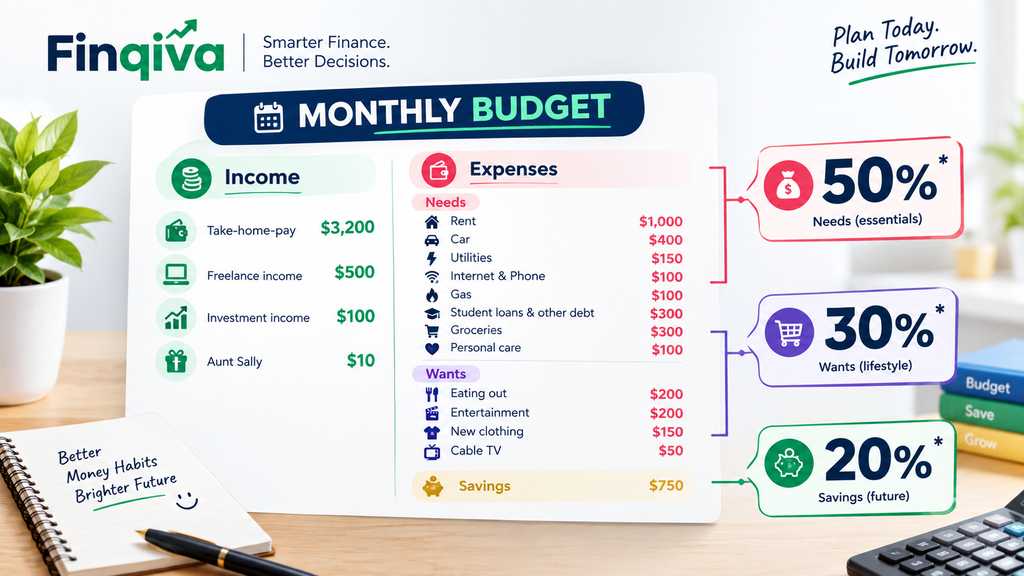
2. Calculate Your Monthly Financial Gap
Compare your monthly income with your essential expenses.
For example:
| Monthly Income | Amount |
| Take-home income | $3,500 |
| Housing | $1,200 |
| Utilities | $250 |
| Food | $500 |
| Transportation | $400 |
| Debt payments | $450 |
| Other essentials | $300 |
| Remaining amount | $400 |
In this example, the person has $400 remaining before additional discretionary spending and savings.
The goal is to identify where that remaining money can be intentionally allocated rather than accidentally spent.
If your expenses are higher than your income, the problem requires a combination of expense reduction, income improvement, or both.
3. Separate Needs From Wants
Not every expense has the same priority.
A useful starting point is to divide spending into:
Needs: Expenses required for basic living and financial obligations.
Wants: Expenses that improve comfort or enjoyment but can potentially be reduced.
This does not mean eliminating every enjoyable expense.
Instead, identify the expenses that provide the least value relative to their cost.
For example, cutting several unused subscriptions may be easier than dramatically reducing grocery spending.
4. Reduce Your Largest Expenses First
Small spending cuts can help, but larger recurring expenses often have a greater impact.
Look at:
- Housing
- Transportation
- Insurance
- Debt interest
- Recurring subscriptions
- Dining and takeout
- Phone and internet plans
Saving $10 once is useful. Reducing a recurring $200 monthly expense can create a much larger long-term difference.
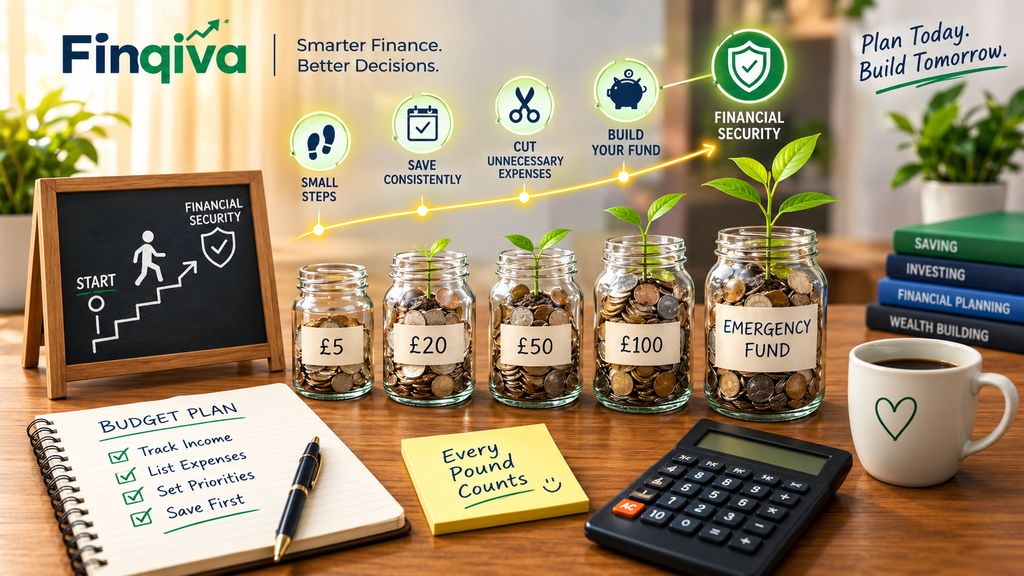
5. Build a Small Emergency Fund
When you have no savings, even a modest unexpected expense can force you to use credit.
That is why building an emergency fund is an important step toward escaping the paycheck-to-paycheck cycle.
You do not have to start with a huge target.
Your first goal could simply be a small cash buffer. Once you reach that amount, gradually work toward a larger emergency reserve that can cover several months of essential expenses, depending on your circumstances.
The purpose is to create a financial cushion between you and unexpected expenses.
6. Automate Your Savings
Saving whatever happens to be left at the end of the month often fails when money is already tight.
Instead, consider treating savings as a planned expense.
For example, if you receive $3,000 per month, you might automatically transfer a manageable amount into savings after receiving your paycheck.
Even $25 or $50 per paycheck can build momentum over time.
As your financial situation improves, you can increase the amount.
7. Attack High-Interest Debt
Debt can make it difficult to escape the paycheck-to-paycheck cycle because part of every paycheck is already committed to previous spending.
Pay special attention to high-interest debt.
A common strategy is to pay minimums on all debts while directing additional money toward the debt with the highest interest rate.
Another approach is the debt snowball, where you prioritize the smallest balance first for psychological momentum.
The best method is the one you can follow consistently while keeping all required payments current.
8. Stop Adding New High-Cost Debt
Paying down debt while continuously adding new balances can keep you stuck.
If you frequently rely on credit cards to cover everyday expenses, look for the underlying reason.
Ask:
- Is my monthly budget unrealistic?
- Are fixed expenses too high?
- Am I dealing with irregular expenses?
- Is my income insufficient?
- Am I spending more than I realize?
Solving the underlying cash-flow problem is more sustainable than repeatedly borrowing to cover the gap.
9. Create Sinking Funds for Predictable Expenses
A sinking fund is money set aside gradually for a future expense.
Suppose you expect to spend $600 on car insurance six months from now.
Instead of trying to find $600 when the bill arrives, you could set aside approximately $100 per month.
You can create separate savings categories for expenses such as:
- Car repairs
- Insurance
- Holidays
- Annual bills
- Home maintenance
- Education
- Travel
This can turn unexpected financial pressure into planned spending.
10. Look for Ways to Increase Income
Reducing expenses is only one side of the equation.
If your essential expenses already consume most of your income, finding additional income may have a greater impact than cutting small discretionary purchases.
Potential options can include:
- Asking for additional hours
- Negotiating compensation when appropriate
- Developing a marketable skill
- Freelance work
- Part-time work
- Selling unused items
- Building an additional income stream
Additional income should ideally be used strategically rather than immediately absorbed into lifestyle spending.
Create a Paycheck-Based Budget
If you are paid weekly, biweekly, or twice a month, a monthly budget alone may not be enough.
A paycheck-based budget assigns each paycheck a purpose.
For example:
Paycheck 1
- Rent
- Utilities
- Groceries
- Transportation
Paycheck 2
- Debt payment
- Savings
- Groceries
- Other expenses
This approach can help you understand which bills need to be covered by which income period.
Use the 24-Hour Rule for Nonessential Purchases
Impulse purchases can quietly drain a budget.
For nonessential purchases, consider waiting 24 hours before buying.
Ask yourself:
- Do I actually need this?
- Did I plan for it?
- Can I afford it without using credit?
- Would I rather use this money for another financial goal?
A short pause can prevent many unnecessary purchases.
Don’t Try to Cut Everything at Once
One of the biggest mistakes people make when trying to improve their finances is creating an extremely restrictive budget.
If your plan eliminates every restaurant meal, entertainment expense, hobby, and small purchase immediately, it may be difficult to maintain.
Instead, prioritize changes that have a meaningful financial impact while leaving room for reasonable enjoyment.
A sustainable budget is generally more useful than a perfect budget that you abandon after two weeks.
What If Your Income Isn’t Enough?
Sometimes the issue is not overspending.
If your essential expenses are already consuming nearly all of your income, cutting small expenses may not solve the problem.
In that situation, consider focusing on larger financial changes.
Review Housing Costs
Housing is often one of the largest expenses in a household budget. If your housing cost is significantly higher than what your income can comfortably support, exploring lower-cost alternatives may have a substantial impact.
Review Transportation
Car payments, fuel, insurance, maintenance, and parking can add up quickly.
Consider whether your current transportation arrangement fits your income and needs.
Increase Earning Potential
If expenses cannot realistically be reduced further, improving income may be the most important long-term strategy.
This could involve acquiring a new skill, pursuing better employment opportunities, negotiating compensation, or developing additional income sources.
How to Stay Out of the Paycheck-to-Paycheck Cycle
Breaking the cycle is only the beginning.
Once you create extra cash flow, protect it.
Keep Lifestyle Inflation Under Control
When your income rises, avoid automatically increasing every category of spending.
Instead, direct part of the increase toward:
- Emergency savings
- Retirement
- Debt repayment
- Investments
- Other financial goals
Maintain a Cash Buffer
Keep some money available for unexpected expenses so that every financial surprise does not require borrowing.
Review Your Budget Regularly
Your expenses and income can change.
Review your budget at least monthly and make adjustments when necessary.
Plan for Irregular Expenses
Continue using sinking funds so annual and occasional costs do not become emergencies.
A Simple Plan to Break the Cycle
If you feel overwhelmed, start with these seven steps:
Step 1: Track every expense for one month.
Step 2: Calculate your essential monthly expenses.
Step 3: Identify your three largest opportunities to reduce spending.
Step 4: Set a small emergency savings target.
Step 5: Create a plan for high-interest debt.
Step 6: Automate a manageable savings amount.
Step 7: Look for opportunities to increase income if your budget remains negative.
You do not have to solve everything in one month. Consistent improvement can create significant results over time.
Final Thoughts
Living paycheck to paycheck can create constant financial stress, but it does not have to be permanent.
Start by understanding your cash flow. Track your spending, reduce unnecessary recurring costs, plan for irregular expenses, build an emergency fund, manage high-interest debt, and look for ways to increase income when necessary.
Most importantly, focus on creating a gap between what you earn and what you spend.
That gap gives you room to save, repay debt, handle emergencies, and eventually work toward larger financial goals.
You do not need to completely transform your finances overnight. The goal is to make small, sustainable changes that gradually give you more control over your money.