
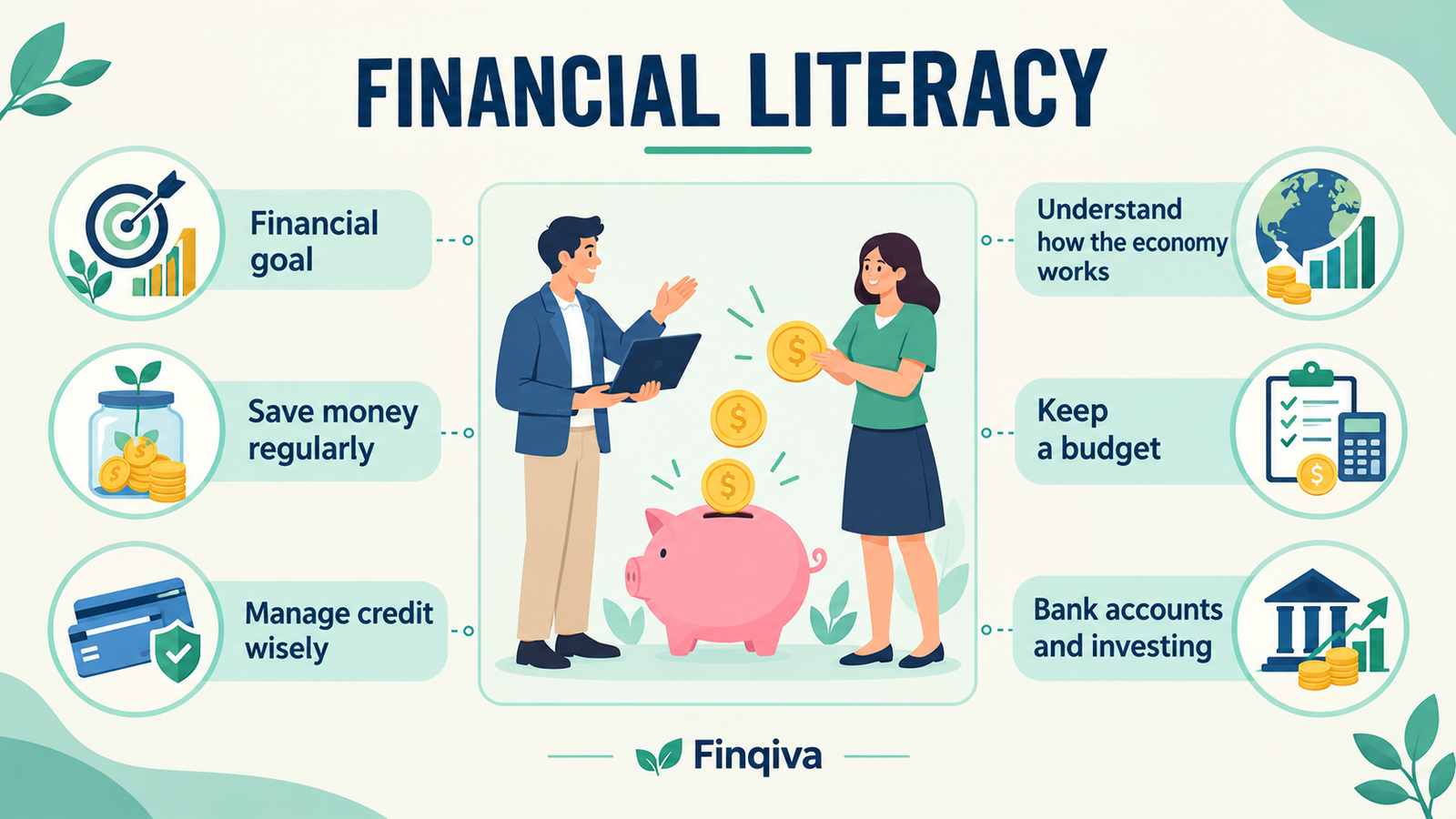
Financial literacy is one of the most important skills for managing money confidently. Whether you want to save for an emergency, pay off debt, improve your credit, or invest for the future, understanding how money works can help you make better financial decisions. Without basic financial knowledge, it can be difficult to create a budget, understand loan terms, compare financial products, or prepare for unexpected expenses. Even people who earn a good income can experience financial difficulties when they lack a clear plan for managing their money. The good news is that financial literacy can be learned step by step. You do not need to be wealthy, have a finance degree, or understand complicated investment strategies to get started. Learning a few essential money skills can help you take greater control of your finances and work toward your financial goals.
What Is Financial Literacy?
Financial literacy is the ability to understand and apply basic financial concepts when making decisions about money.It includes knowing how to earn, spend, save, borrow, invest, and plan for future expenses.A financially literate person can evaluate financial choices, understand common risks, and make decisions based on their income, responsibilities, and goals.
Financial literacy involves several important areas:
- Budgeting: Understanding income and expenses.
- Saving: Setting money aside for emergencies and future goals.
- Debt management: Borrowing responsibly and repaying debt.
- Credit management: Understanding credit reports, credit scores, and borrowing costs.
- Investing: Understanding risk, returns, diversification, and long-term growth.
- Financial planning: Preparing for major expenses and long-term needs.
Financial literacy does not mean knowing everything about money. It means having the knowledge and confidence to make informed financial decisions.
Why Is Financial Literacy Important?
Financial decisions affect nearly every part of daily life. The way you manage money today can influence your ability to handle emergencies, purchase a home, pay for education, and prepare for retirement.
1. It Helps You Manage Your Money
Understanding your income and expenses makes it easier to determine where your money goes.A budget can help you identify unnecessary spending, prioritize essential expenses, and allocate money toward savings and other goals.
2. It Helps You Build Savings
Financial literacy teaches you how to set realistic savings goals and prepare for unexpected costs.Instead of relying entirely on your next paycheck, you can gradually build a financial cushion that provides more flexibility.
3. It Helps You Avoid Expensive Debt
Loans and credit cards can be useful financial tools, but borrowing without understanding interest rates, fees, and repayment terms can create long-term problems.Financial knowledge helps you compare borrowing options and understand the true cost of debt.
4. It Helps You Make Better Investment Decisions
Investing involves risk, and different investments serve different purposes.Understanding basic investment concepts can help you evaluate opportunities, diversify your portfolio, and avoid decisions based entirely on hype or unrealistic promises.
5. It Supports Long-Term Financial Security
Financial literacy can help you prepare for major life events, including buying a home, raising a family, changing careers, or retiring.A stronger understanding of money allows you to plan ahead instead of reacting to every financial challenge.
The Five Essential Areas of Financial Literacy
Building financial literacy becomes easier when you divide it into practical skills.
1. Budgeting and Money Management
Budgeting is the foundation of personal finance.A budget shows how much money you receive, how much you spend, and how much remains available for saving or other goals.Start by calculating your monthly income after taxes and other deductions. Then list your expenses.
You can divide spending into three main categories:
| Category | Examples |
| Needs | Housing, groceries, utilities, transportation |
| Wants | Entertainment, dining out, nonessential shopping |
| Financial goals | Savings, additional debt payments, investments |
One budgeting approach is the 50/30/20 rule.
Under this guideline, you allocate approximately:
- 50% of after-tax income to needs.
- 30% to wants.
- 20% to savings and debt repayment.
These percentages are starting points rather than strict requirements. If your housing costs are high or your income is limited, you may need a different allocation.The most useful budget is one that reflects your actual circumstances and helps you make consistent progress.
2. Saving and Emergency Funds
Saving means setting aside money for future needs rather than spending all your available income.
There are several reasons to save:
- Handling unexpected expenses.
- Preparing for major purchases.
- Avoiding unnecessary borrowing.
- Paying for planned expenses.
- Building long-term financial security.
An emergency fund is especially important because unexpected expenses can occur at any time.Start with a manageable target, such as enough to cover a minor emergency. Gradually work toward a larger reserve that could cover several months of essential expenses, depending on your circumstances.You can also create separate savings goals for predictable expenses, such as car maintenance, insurance, education, or annual bills.
Practical tip: Automate a small transfer into savings after receiving your income if your budget allows it. Consistency matters more than starting with a large amount.
3. Understanding Credit and Debt
Credit allows you to borrow money or access financing, but it comes with responsibilities.Financial literacy helps you understand the difference between useful borrowing and debt that may become difficult to manage.
Before accepting a loan or credit card, examine:
- The interest rate.
- Fees and other charges.
- Monthly repayment requirements.
- The total repayment amount.
- Penalties for late payments.
- Whether the payment fits your budget.
For example, a loan with a lower advertised payment may still cost more overall if it has a longer repayment period or additional fees.Credit history is another important consideration. In countries that use credit reporting and scoring systems, lenders may examine your repayment history and other information when evaluating applications.Paying bills on time, managing balances responsibly, and checking credit reports for errors can help you maintain a stronger credit profile.
4. Investing and Growing Wealth
Saving and investing are related, but they serve different purposes.Savings generally provide greater accessibility and stability, depending on the account and institution. Investing involves risk in exchange for the potential to grow wealth over time.
Common investment options include:
- Stocks.
- Bonds.
- Mutual funds.
- Exchange-traded funds.
- Real estate.
- Other investments appropriate to your circumstances.
Each investment has different risks, costs, and potential returns.
For example, stocks may offer long-term growth potential, but their prices can fall significantly. Bonds have different risk characteristics, including interest-rate and credit risk. Diversified funds can spread investments across multiple holdings, although diversification does not eliminate the possibility of losses.Before investing, consider your time horizon, financial goals, ability to tolerate losses, and need for accessible cash.It is also important to understand compound growth.Compounding occurs when investment returns generate additional returns over time. Reinvesting earnings can increase the amount invested, potentially accelerating growth over long periods.However, investment returns are not guaranteed, and losses can also compound.
5. Financial Planning and Goal Setting
Financial planning connects your everyday money decisions with your future goals.Instead of simply trying to save more, define what you are saving for and when you may need the money.
Your goals might include:
- Building an emergency fund.
- Paying off high-interest debt.
- Saving for education.
- Purchasing a home.
- Preparing for retirement.
- Starting a business.
- Building long-term investment wealth.
A useful goal should be specific and realistic.
For example, rather than saying, “I want to save more money,” you could aim to save $1,200 over the next 12 months.That would require saving an average of $100 per month.If that amount is not realistic for your current income, choose a smaller target and increase it when your circumstances improve.
How to Improve Your Financial Literacy
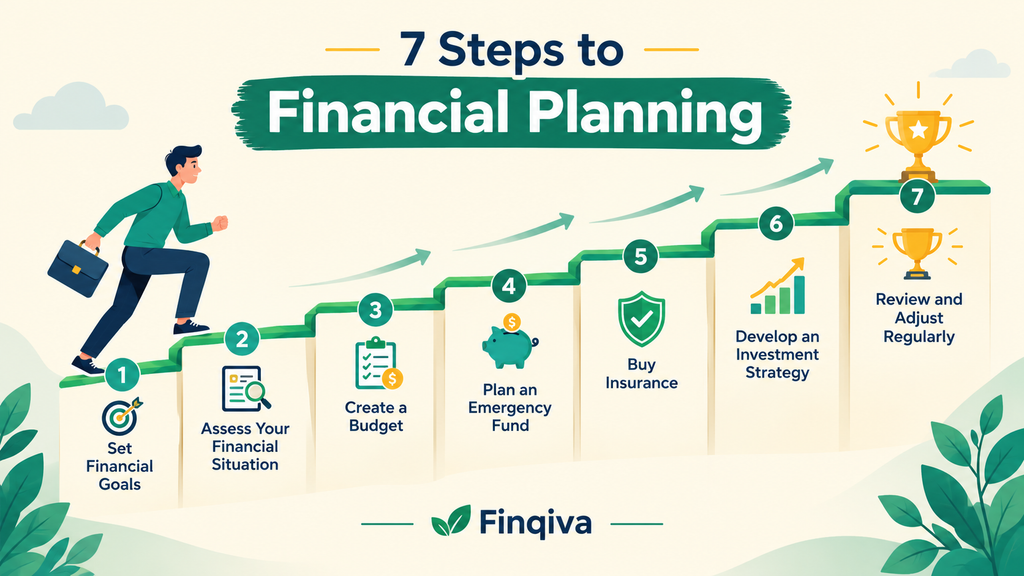
You do not need to learn every financial concept at once. Start with the skills that have the greatest effect on your current situation.
Step 1: Understand Your Financial Position
Calculate your monthly income, essential expenses, debt balances, savings, and other financial obligations.This gives you a clear starting point.
Step 2: Learn to Create a Budget
Track your spending for at least one month.Identify your largest expenses and determine whether your spending matches your priorities.
Step 3: Build a Savings Habit
Choose a manageable savings target and make regular contributions when possible.If your budget is already stretched, start by identifying opportunities to reduce major costs or increase income rather than assuming every financial problem can be solved through small spending cuts.
Step 4: Understand Interest Rates
Learn how interest affects both borrowing and saving.For debt, understand the difference between the advertised rate, fees, and the total cost of repayment.For savings and investments, understand how rates, returns, inflation, and taxes may affect your money.
Step 5: Learn the Basics of Investing
Before investing, understand risk, diversification, fees, time horizons, and the difference between guaranteed products and market-based investments.Avoid making decisions solely because a friend, influencer, or online advertisement recommends an opportunity.
Step 6: Review Your Progress
Review your budget, savings, and debt regularly.Your financial plan may need to change when your income, household responsibilities, or goals change.
Common Financial Literacy Mistakes to Avoid
Even people who understand basic financial concepts can make costly mistakes.
Spending Without a Plan
Without a budget, it is easy to underestimate everyday expenses and overestimate how much money is available.
Ignoring Emergency Savings
Without an emergency fund, unexpected costs may lead to expensive borrowing or missed payments.
Making Only Minimum Debt Payments Without a Plan
Minimum payments may keep an account current, but they can allow debt to remain outstanding for a long time and increase total interest costs.Understand your repayment terms and develop a realistic plan for reducing expensive debt.
Investing Without Understanding the Risks
An investment that has performed well in the past may still lose value.Research investments carefully and avoid putting money into products you do not understand.
Falling for Financial Scams
Be cautious of anyone promising guaranteed high returns, demanding urgent payments, or pressuring you to invest without providing clear information.Verify financial institutions and investment providers through the relevant official regulatory authorities in your country.
Failing to Plan for the Future
Financial goals often require time.Waiting until a major expense is close can make it harder to save enough money without taking on debt.
Financial Literacy vs. Financial Education
Financial literacy and financial education are closely related, but they are not exactly the same.
Financial education is the process of learning about money, banking, borrowing, investing, and financial planning.
Financial literacy is the ability to understand that information and apply it to real financial decisions.
For example, learning how compound interest works is financial education. Using that knowledge to compare savings options or understand the long-term cost of debt demonstrates financial literacy.Both are valuable because knowledge becomes more useful when you can apply it to everyday situations.
How Financial Literacy Can Help You Build Wealth
Building wealth usually requires a combination of earning, spending, saving, investing, and planning.Financial literacy helps you understand how these activities work together.
A practical approach might involve:
- Spending less than you earn when circumstances allow.
- Building an emergency fund.
- Paying down expensive debt.
- Saving for important financial goals.
- Investing according to your time horizon and risk tolerance.
- Reviewing your financial progress regularly.
The right order may vary depending on your situation. For example, someone facing urgent essential expenses may need to stabilize their cash flow before focusing on investing.Financial literacy cannot guarantee wealth, but it can help you make more informed decisions and avoid preventable financial mistakes.
Does Financial Literacy Depend on Income?
No. Financial literacy is useful at every income level.People with lower incomes may use financial knowledge to prioritize essential expenses, manage bills, identify assistance programs, and avoid expensive debt.People with higher incomes may use it to manage investments, plan taxes, evaluate borrowing decisions, and prepare for retirement.
However, financial literacy cannot eliminate every financial challenge. When essential living costs exceed available income, budgeting alone may not be enough. Access to better employment, affordable housing, financial assistance, or other resources may also be necessary.The purpose of financial literacy is to improve decision-making—not to suggest that every financial difficulty results from poor personal choices.
A Simple Financial Literacy Checklist
Use this checklist to identify areas where you can improve.
- I know how much money I receive each month.
- I understand where my money goes.
- I have a budget or spending plan.
- I have started building emergency savings.
- I understand the interest rates and fees on my debts.
- I know how to check my credit information, where applicable.
- I understand the risks before making investments.
- I have clear short-term and long-term financial goals.
- I review my financial progress regularly.
- I know how to recognize common financial scams.
You do not need to check every box immediately. Use the list to choose your next learning goal.
Final Thoughts
Financial literacy is an essential life skill that can help you manage money, make informed decisions, and prepare for the future.
By learning how to budget, save, manage debt, understand credit, evaluate investments, and plan for financial goals, you can build a stronger foundation for your financial life.Start with one practical step. Track your spending, learn how interest works, create a small savings goal, or review the terms of a financial product you already use.Over time, these small learning steps can help you approach financial decisions with greater confidence and clarity.You do not need to become a financial expert to improve your financial well-being. You need reliable information, realistic goals, and the willingness to keep learning.